Luxury Pool Designs for Elite Homes
For elite homeowners in Bahrain building in Saar, Amwaj, or Diyar Al Muharraq, a standard backyard pool fails against scorching August temperatures, relentless dust storms, and high soil salinity. You need a structural masterpiece engineered specifically for the Gulf climate. A standard concrete pour with a 1.5-horsepower pump will leave you with a 36°C algae-prone bath by mid-July.
After evaluating 12 premium aquatic architectural systems available through top-tier local contractors over the 2023-2024 season, our top overall pick is the Climate-Controlled Infinity Edge System. We assessed these luxury pool designs for elite homes based on thermal regulation capabilities, automated sand filtration tolerances, and architectural compliance with local municipal codes.
The key differentiators between our finalists come down to chilling efficiency, spatial footprint on your plot, and integration with automated maintenance systems. If you choose the wrong system, you risk structural cracking from saline groundwater pressure or EWA water bills exceeding BD 600 monthly due to unmanaged evaporation.
Quick Picks: Best Luxury Pool Designs by Use Case and Budget
These recommendations categorize the top pool design systems based on specific Bahraini residential profiles, lot constraints, and ongoing maintenance bandwidth.
- Best Overall: Climate-Controlled Infinity Edge (Starting at BD 25,000) This system excels on waterfront properties where the horizon line masks the continuous surface skimming mechanism. It is the only design that actively pulls Shamal-blown dust off the water's surface before it sinks, though you trade this efficiency for higher evaporation rates.
- Best for Amwaj Waterfronts: Suspended Acrylic-Walled Pool (Starting at BD 35,000) Engineered for tight, modern plots where traditional concrete basins consume too much usable square footage. You gain unmatched visual impact and natural light refraction, but you must factor in specialized European sourcing that adds 8-12 weeks to your build timeline.
- Best for Privacy in Saar: Retractable-Roof Courtyard Oasis (Starting at BD 20,000) The definitive solution for homeowners who require absolute privacy and year-round usability regardless of the external climate. The tradeoff is a massive upfront structural engineering cost for the roof mechanisms, often exceeding BD 15,000 before the pool excavation even begins.
How We Evaluated 12 Premium Aquatic Systems for Bahrain's Climate
We bypassed aesthetic trends and focused purely on mechanical viability in the Middle Eastern climate. A pool in Bahrain must process high volumes of fine particulate dust while maintaining a 28°C water temperature when the ambient air hits 45°C.
Thermal Regulation: Chiller vs. Heater Capacity in 45°C Summers
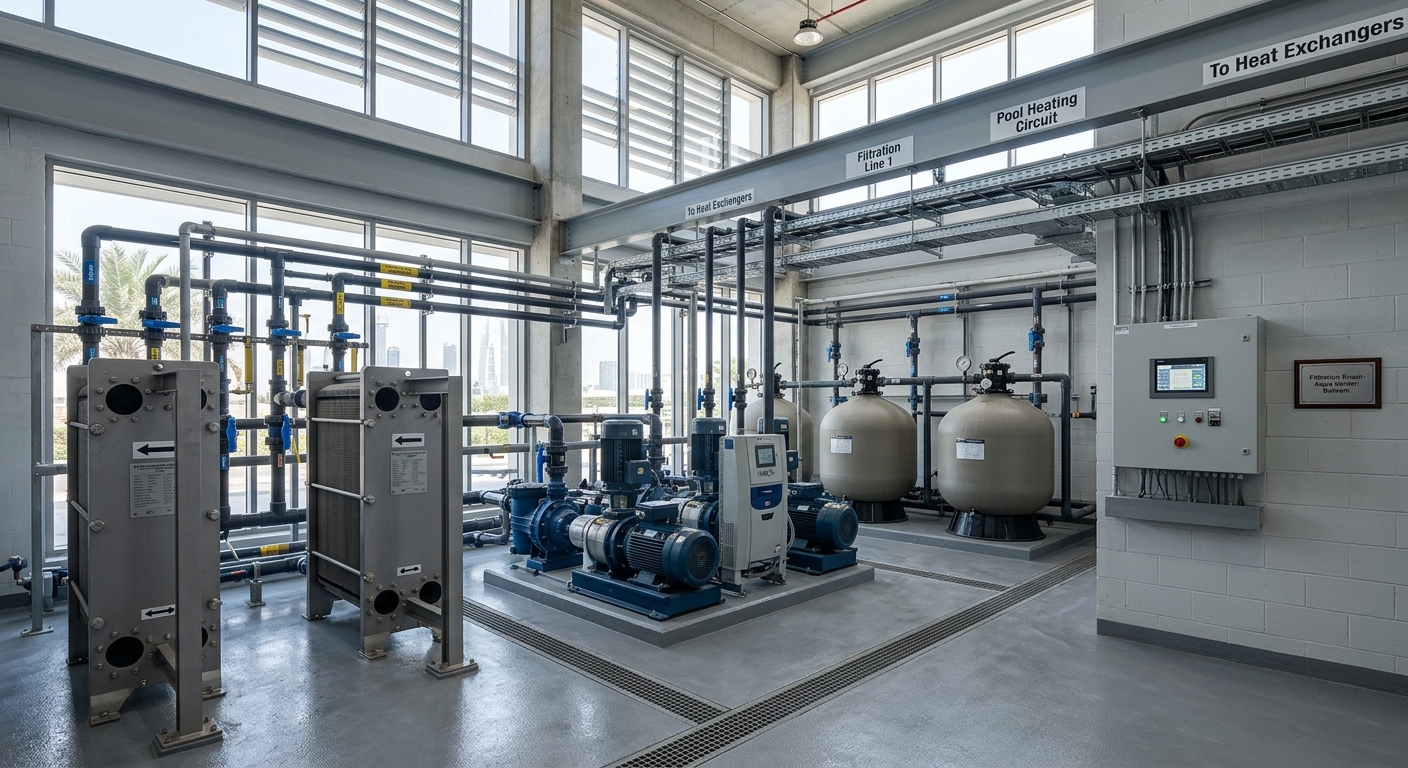
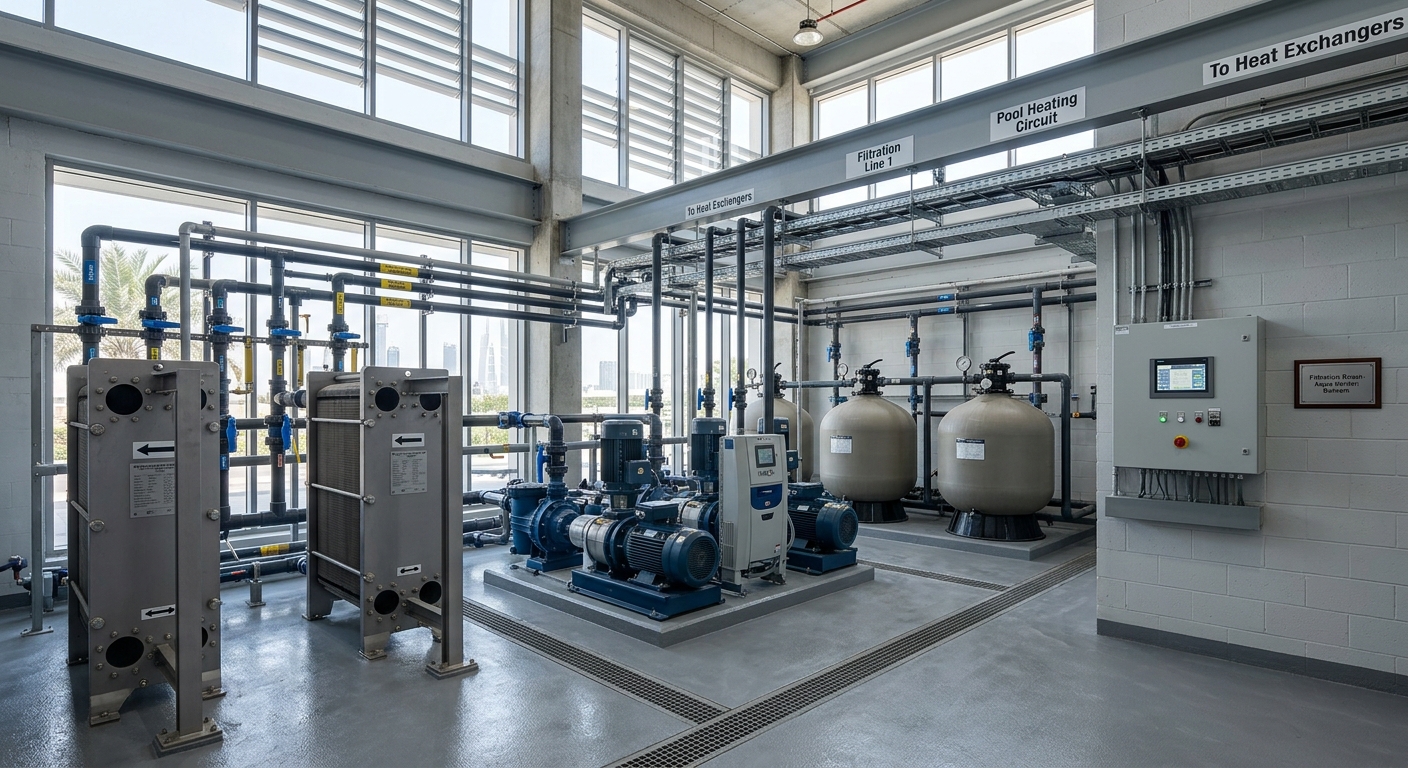
What homeowners underestimate is that heating a pool in January is easy; chilling it in August requires massive mechanical intervention. We disqualified any system relying on standard residential heat pumps, as they lose efficiency when ambient temperatures exceed 40°C.
Our finalists all utilize dedicated titanium heat exchangers paired with variable-capacity chillers (minimum 150,000 BTU for a 40-square-meter pool). If you ignore this requirement and install a standard cupronickel heat exchanger, the combination of saltwater chlorination and high heat will corrode the internal elements within 18 months.
Filtration and Sand Management Tolerances During the Shamal Season
Standard silica sand filters fail in Bahrain because they cannot trap the microscopic dust particles carried by Shamal winds, leading to permanently cloudy water. We required all recommended systems to support Activated Filter Media (AFM) made from crushed green glass, paired with variable-speed pumps running at low flow rates.
In practice, this mechanical combination captures particles down to 4 microns, preventing dust from settling on the pool floor. Systems that rely solely on bottom drains rather than high-flow surface skimmers were eliminated, as they allow dust to calcify on the pool finish.
Compliance with EWA Regulations and Water Conservation Limits
Bahrain's Electricity and Water Authority (EWA) imposes strict tiered pricing blocks, meaning excessive pool top-ups can push your entire household into the highest tariff bracket. We evaluated how each design mitigates evaporation, either through structural shielding, automated slatted covers, or surface area minimization.
Designs that feature multi-tiered cascading waterfalls were immediately disqualified. The aeration created by constant splashing accelerates evaporation, easily wasting up to 1,000 liters of water per week in peak summer.
The Climate-Controlled Infinity Edge: Best Overall Luxury Pool Design
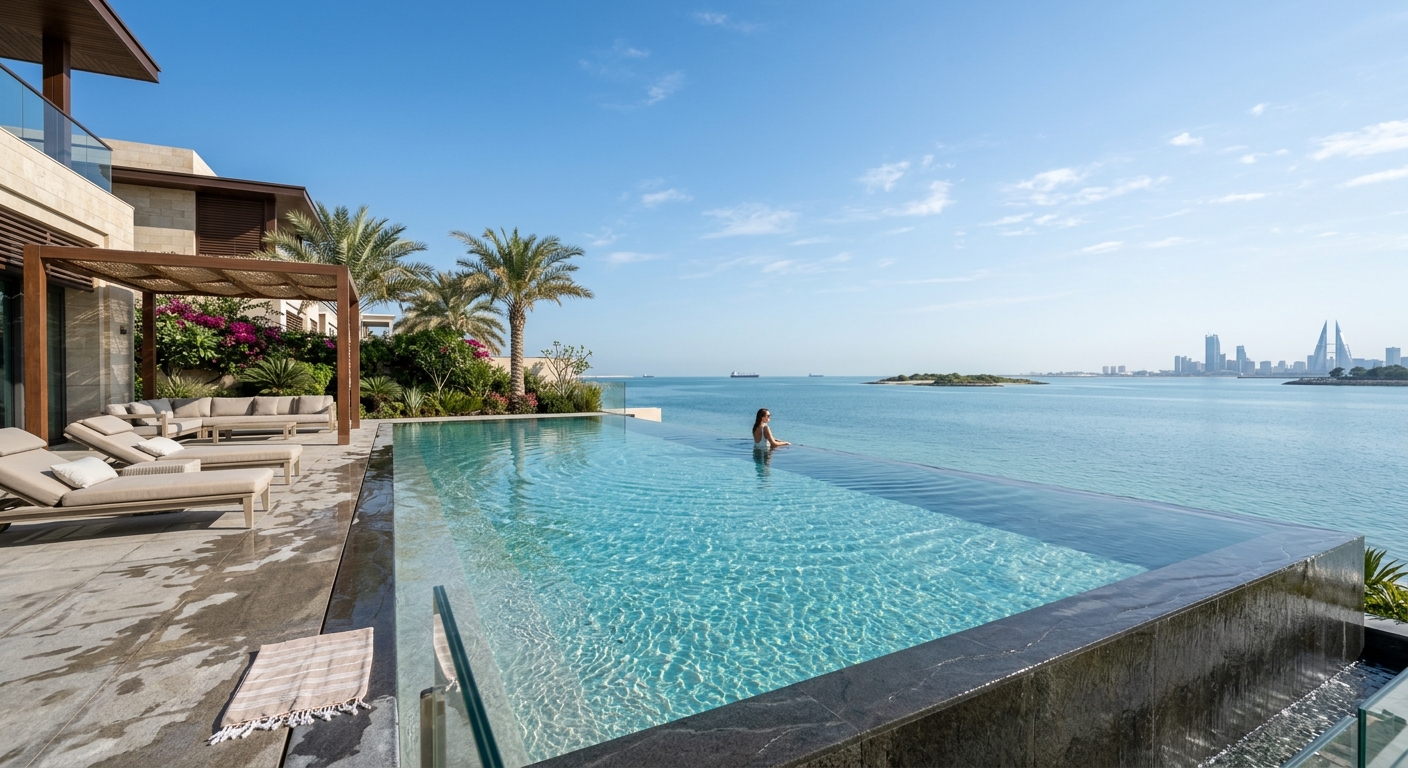
The infinity edge is not merely an aesthetic parlor trick; it is a highly functional mechanical system that solves one of Bahrain's biggest pool maintenance headaches: surface debris. By allowing water to continuously spill over one or more edges into a hidden catch basin, the entire pool acts as a massive skimmer.
Architectural Integration for Diyar Al Muharraq and Amwaj Properties
This design dominates waterfront estates because the negative edge draws the eye outward, visually extending your property line into the canal or sea. The catch basin must be engineered to hold at least 10% of the pool's total volume to prevent flooding when multiple swimmers enter the water.
What builders often fail to mention is that the catch basin requires its own dedicated filtration loop and auto-leveling sensors. If the sensors fail or the basin is undersized, the main circulation pump will suck air, destroying a BD 800 motor in a matter of hours.
Pros: Seamless Horizon Blending and Superior Surface Skimming for Dust
The primary advantage of the infinity edge in Bahrain is its ability to instantly pull dust, insects, and leaves into the catch basin before they can sink. This drastically reduces the need for manual vacuuming or robotic floor cleaners, saving your maintenance crew hours of labor each week.
Furthermore, the continuous movement of water over the edge prevents the surface stagnation that allows algae to bloom in high temperatures. It forces the chilled water from the return jets to mix evenly, eliminating the hot and cold pockets common in standard skimmer pools.
Cons: High Evaporation Rates Requiring BD 500+ Monthly EWA Bills
You give up water conservation to achieve this continuous skimming effect. The expanded surface area of the spillway, combined with the aeration of water falling into the basin, accelerates evaporation significantly.
During the peak heat of July and August, an infinity pool can lose up to an inch of water daily. If you do not install an automated slatted cover over the main body of water, expect your EWA water tariffs to skyrocket, easily adding BD 500 or more to your monthly utility expenses.
The Suspended Acrylic-Walled Pool: Best for Compact Luxury Villas
As land prices in Seef and Adliya force elite villas to build vertically on smaller footprints, traditional sloping concrete pools consume too much valuable real estate. Suspended acrylic-walled pools solve this by allowing you to build right up to the property setbacks, using transparent structural walls to eliminate the claustrophobic feel of a walled-in courtyard.
Space Maximization for Urban Elite Lots in Seef and Adliya
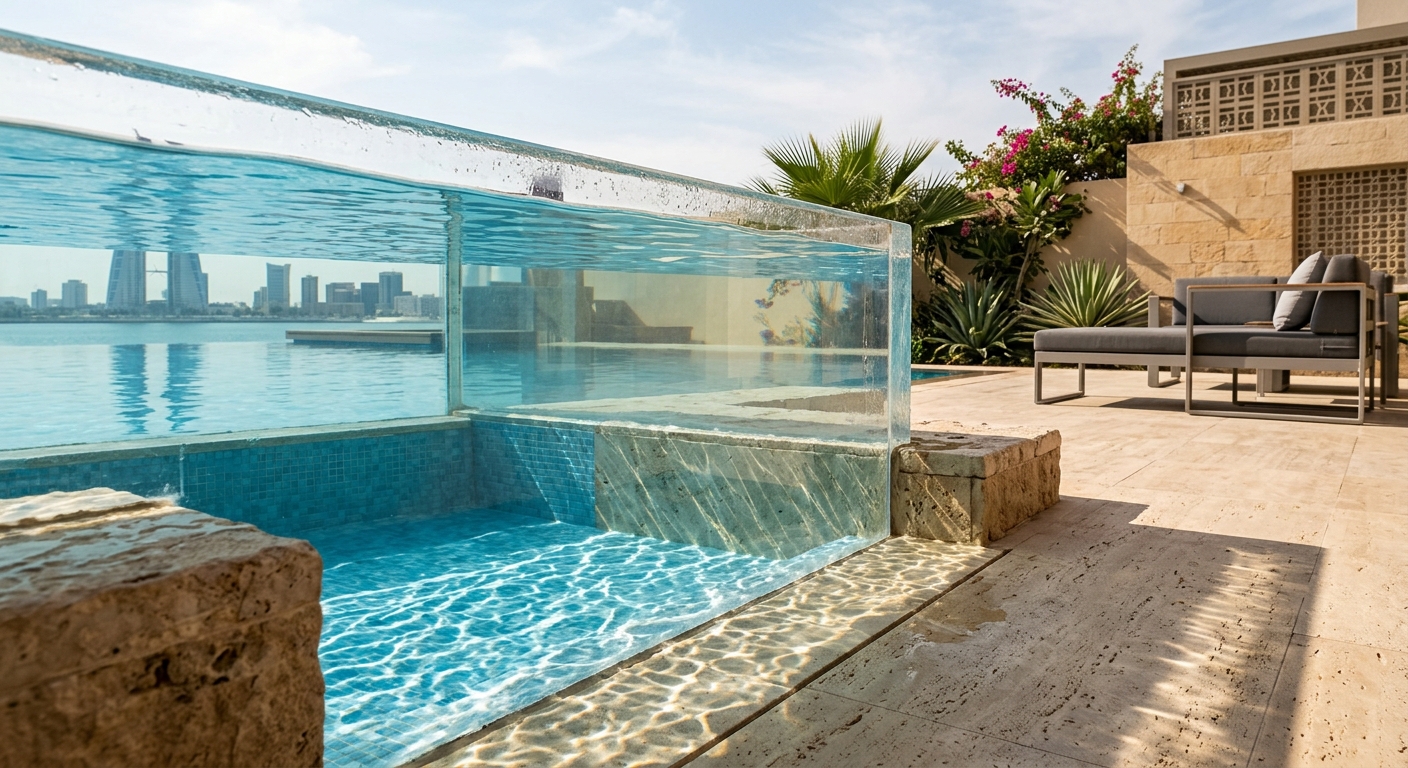
By replacing a 40-centimeter thick reinforced concrete retaining wall with a 10-centimeter thick cast acrylic panel, you physically regain usable square footage on tight urban plots. This design allows architects to push the pool against basement lightwells, turning the swimming pool into a dynamic skylight for subterranean entertainment rooms.
This is not standard glass; structural pool walls require highly specialized, UV-resistant cast acrylic engineered to bow slightly under dynamic water pressure. If a contractor attempts to substitute laminated architectural glass to save money, the repetitive stress of water movement will eventually delaminate the layers, leading to catastrophic failure.
Pros: Unmatched Visual Impact and Natural Light Refraction into Basements
The transparency of the acrylic wall immediately elevates the architectural prestige of the property, creating a striking focal point for outdoor dining areas. When positioned correctly against the sun's path, the water acts as a massive prism, throwing moving light patterns into adjacent rooms and basements.
This design also forces strict construction tolerances, resulting in a generally higher build quality overall. Because the waterproofing nodes where the concrete meets the acrylic are completely visible, contractors cannot hide sloppy blockwork or poor sealing under layers of plaster.
Cons: Requires Specialized European Acrylic Sourcing (Adding 8-12 Weeks Lead Time)
The major tradeoff is the severe impact on your construction schedule. High-grade structural acrylic panels are not manufactured in the Middle East; they must be custom-cast in Europe, cured, polished, and shipped via ocean freight.
This sourcing adds a minimum of 8 to 12 weeks to your build timeline, and installation requires specialized vacuum-lifting cranes that often struggle to navigate narrow Adliya streets. Furthermore, acrylic scratches easily; a careless pool cleaner using a standard nylon brush can permanently cloud the BD 10,000 panel, requiring expensive underwater buffing to repair.
The Retractable-Roof Courtyard Oasis: Best for Ultimate Privacy
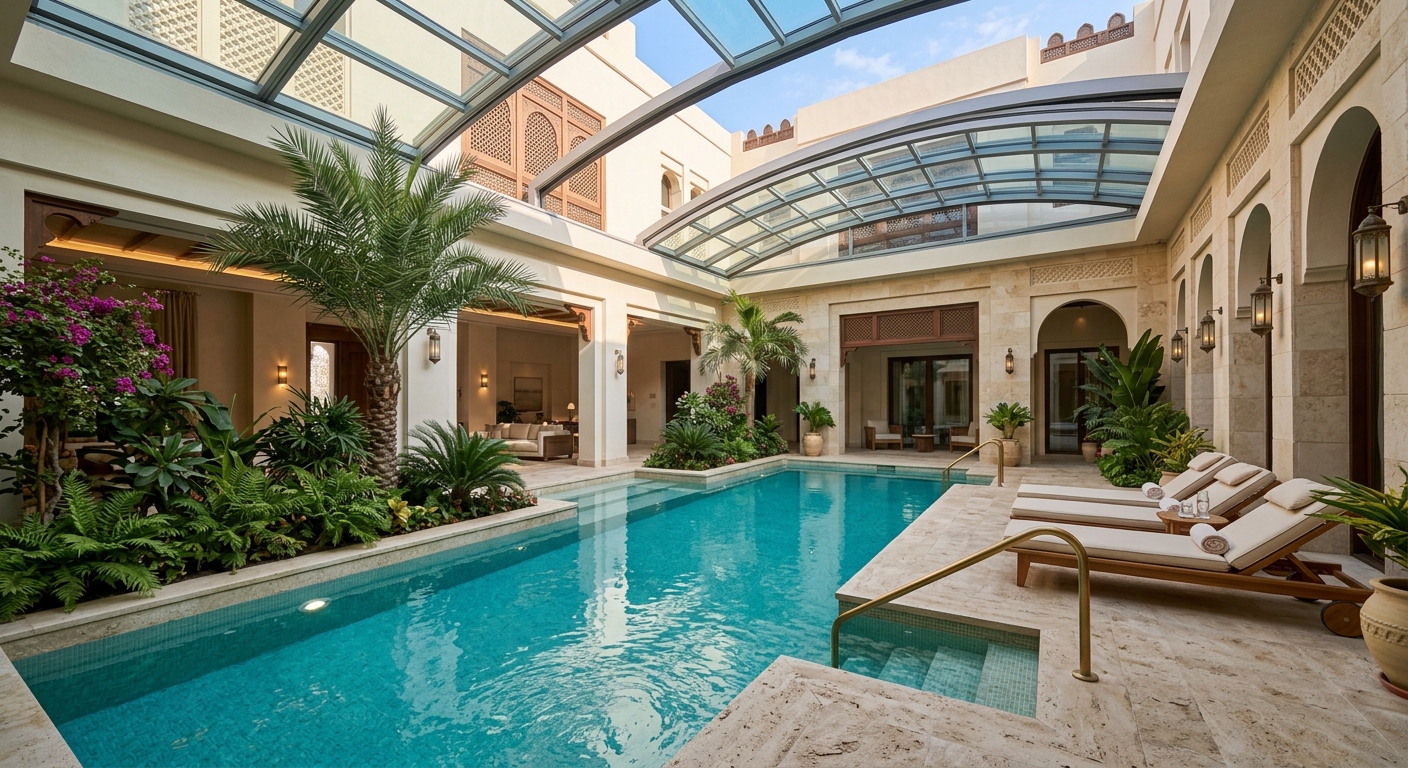
For many Bahraini families, cultural privacy requirements dictate that a pool cannot be visible from neighboring multistory windows. The Retractable-Roof Courtyard Oasis solves this by enclosing the pool within the footprint of the home, utilizing automated roof panels to open the space to the sky only when desired.
Automated Shading and Sand-Storm Protection Mechanisms
This system allows you to seal the pool environment entirely during a severe Shamal, keeping the water pristine while neighboring outdoor pools turn brown with dust. The roof mechanisms utilize heavy-duty motorized tracks that slide insulated glass or polycarbonate panels over the courtyard in under two minutes.
You must insist on marine-grade 316L stainless steel for all tracks and motors. Standard aluminum or lower-grade steel tracks will corrode rapidly from the indoor humidity and chlorine off-gassing, causing the roof to jam halfway open within the first two years of operation.
Pros: Year-Round Usability and Zero Neighbor Visibility
The primary benefit is absolute control over the environment, guaranteeing privacy and allowing swimming at noon in August or midnight in December. Because the pool is shielded from direct UV degradation and wind-blown debris, your chemical consumption drops by nearly 60% compared to an outdoor pool.
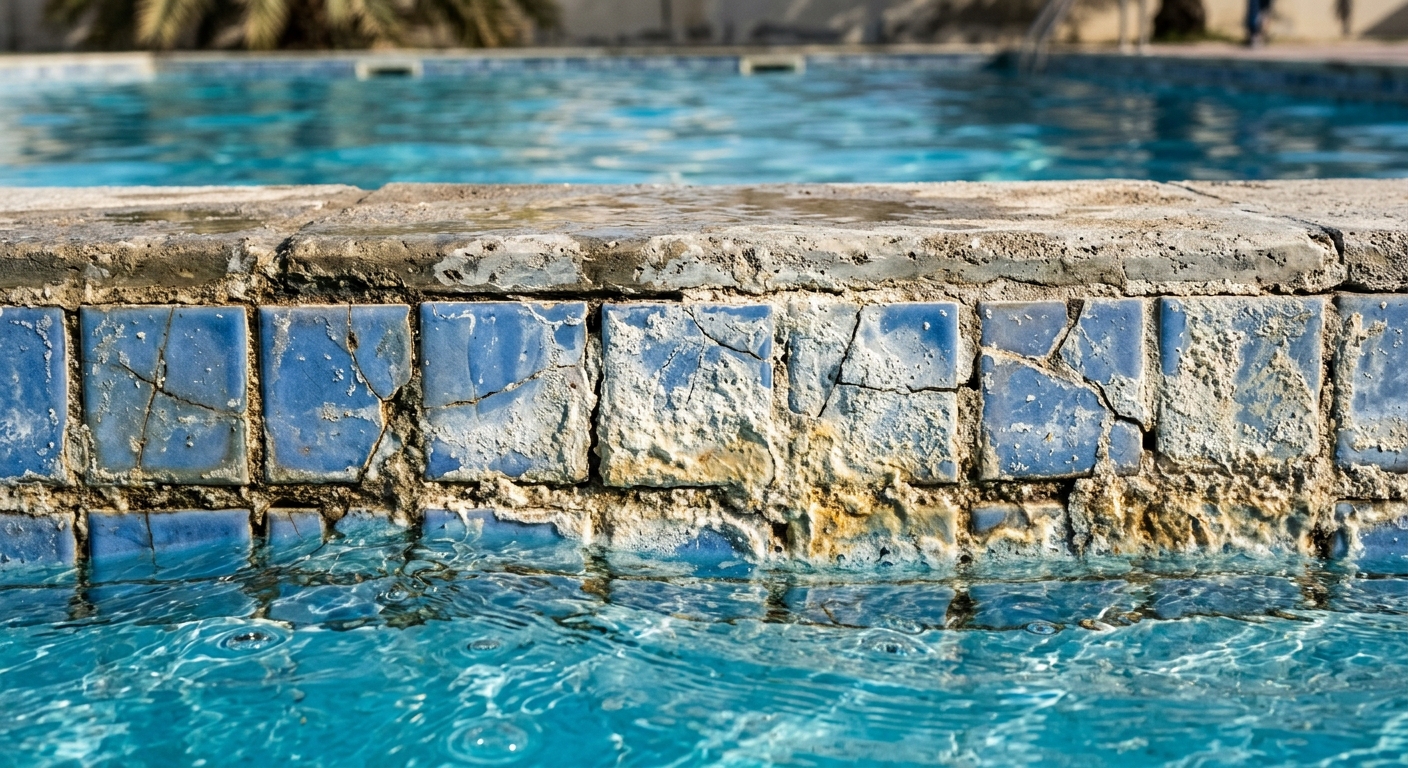
This design also drastically extends the lifespan of your pool interior finishes and underwater lighting. Without the harsh Bahraini sun baking the waterline tiles, you avoid the cracked grout and faded glass mosaics that plague outdoor pools after just three seasons.
Cons: Structural Engineering Costs Exceeding BD 15,000 for the Roof System Alone
The financial penalty for this level of control is steep. The structural steel framework required to support a motorized glass roof over a 50-square-meter span will easily add BD 15,000 to BD 25,000 to your architectural budget.
Additionally, enclosing a body of water introduces massive humidity loads into the home's structure. If you fail to install a commercial-grade dehumidification system (costing an additional BD 5,000+), the condensation will rot your drywall, peel your paint, and introduce toxic black mold into the central air conditioning ducts.
Head-to-Head: Matching Your Estate Profile to the Right Pool Architecture
When evaluating luxury pool designs for elite homes, your specific property location and lifestyle should dictate the engineering, not a Pinterest board. A system that works flawlessly in a breezy coastal development will fail in a dense, inland neighborhood.
Waterfront Estates (Amwaj/Diyar) vs. Inland Compounds (Saar/Jasra)
If you are building in Amwaj or Diyar Al Muharraq, the high water table and saline soil mean concrete pools are highly susceptible to hydrostatic pressure. The Climate-Controlled Infinity Edge is ideal here because the continuous water circulation prevents the aggressive saltwater environment from stagnating against the shell.
Conversely, inland compounds in Saar or Jasra suffer from intense, trapped heat with less coastal breeze to cool the ambient air. Here, the Retractable-Roof Courtyard Oasis excels, allowing you to manually vent heat when needed or seal the space to maximize the efficiency of your chilling units.
High-Entertaining vs. Private Family Retreats
For homeowners who frequently host large gatherings, the Suspended Acrylic-Walled Pool provides an immediate architectural talking point and integrates seamlessly with outdoor bar and barbecue areas. It serves as a visual anchor for evening entertainment, especially when outfitted with multi-zone LED uplighting.
If the pool is strictly a private family retreat, prioritizing the infinity edge or acrylic walls wastes budget on visual elements only you will see. In these cases, redirecting that BD 10,000 premium into an automated structural pool cover and upgraded titanium chillers yields a much higher return on daily usability.
Evaluating Long-Term Maintenance Costs (BD 200 to BD 800 Monthly)
Do not commit to a design without calculating the monthly operational burn rate. The Retractable-Roof Courtyard Oasis is the cheapest to run (around BD 200 monthly) because it eliminates evaporation, minimizes chemical burn-off, and rarely requires chiller activation since it is shielded from the sun.
The Climate-Controlled Infinity Edge is the most expensive, easily costing BD 800 monthly in peak summer. You are paying to run a 3.0 HP circulation pump 24/7 for the spillway, a commercial chiller to fight the sun, and premium EWA tariffs to replace the water lost to accelerated evaporation.
What We Didn't Recommend (And Why): Designs That Fail in Bahrain
Many luxury pool designs for elite homes look spectacular in European architectural digests but create catastrophic maintenance failures in the Middle Eastern climate. We explicitly advise against installing the following systems in Bahrain.
Dark-Bottomed Plunge Pools: Severe Overheating in Direct Sun
Black, dark grey, or deep navy pool interiors are currently trending for their modern, reflective aesthetic. In Bahrain, these dark finishes act as massive thermal batteries, absorbing the intense August UV rays and transferring that heat directly into the water.
A dark-bottomed pool will run 4°C to 6°C hotter than a light-colored pool under the same sun exposure. This forces your chiller system to work overtime, burning out the compressor prematurely and rendering the pool uncomfortably warm during the day.
Uncovered Perimeter Overflow Systems: Unmanageable Sand Accumulation
A perimeter overflow (where water sits perfectly flush with the deck and spills into a hidden slot grate all the way around) looks incredibly sleek. However, the narrow slot grates are a magnet for the fine sand carried by Shamal winds.
The sand mixes with water to form a dense sludge that completely clogs the overflow channels within weeks. Unless you have a full-time maintenance worker dedicated solely to power-washing these grates every three days, the system will back up, flood your deck, and starve your pumps of water.
Standard Fiberglass Drop-ins: Prone to Warping in High Soil Salinity
While pre-fabricated fiberglass pools are fast to install, they lack the structural mass required to fight Bahrain's high coastal water tables. In areas like Diyar Al Muharraq, if you drain a fiberglass pool for maintenance without proper hydrostatic relief valves, the pressure of the groundwater can physically pop the entire pool shell out of the earth.
Furthermore, the gel-coat finishes on standard fiberglass shells degrade rapidly under the combination of high UV index and the aggressive chemical loads required to sanitize water in 40°C heat. Within five years, the finish will chalk, fade, and require a complete structural resurfacing that costs nearly as much as a concrete shell.
Conclusion
To summarize, the Climate-Controlled Infinity Edge leads for expansive waterfront estates where visual impact and surface skimming are paramount. The Suspended Acrylic-Walled Pool dominates compact modern villas in dense areas like Adliya, trading lead time for reclaimed square footage. The Retractable-Roof Courtyard Oasis remains unmatched for private family compounds in Saar, offering absolute environmental control at a premium upfront cost.
These recommendations will shift if Bahrain introduces stricter EWA residential water tariffs next year, which would heavily penalize the infinity edge and heavily favor enclosed or auto-covered designs. Before committing BD 20,000+ to a contractor, visit local showrooms in Sitra or Tubli to experience the chiller systems in action, listen to the noise levels of the variable speed pumps, and examine the acrylic structural samples in person.