Landscape Architecture for Luxury Homes
The number one mistake property owners make when investing in landscape architecture for luxury homes is hiring a planting contractor before securing a licensed landscape architect. This sequencing error results in disjointed outdoor spaces that fail entirely during Bahrain’s brutal August heat. Most guides overcomplicate the process by focusing on exotic plant selection, but successful high-end landscaping in the Arabian Gulf boils down to three critical factors: microclimate engineering for heat mitigation, advanced saline-resistant water management, and seamless architectural continuity with the main villa.
To navigate this investment, use a strict 'Engineer First, Plant Last' framework. This ensures the structural and environmental groundwork dictates the final aesthetic. A beautiful planting schematic is worthless if the underlying soil is toxic with salt or the irrigation system evaporates 60% of its water before reaching the roots. You are not buying a garden; you are engineering an outdoor living environment designed to survive one of the harshest climates on earth.
Factor 1: Climate Resilience and Microclimate Engineering
The primary driver of your landscape design must be its ability to withstand Bahrain's extreme summer temperatures and high humidity while creating usable outdoor spaces year-round. If you cannot comfortably sit outside in late May or early October, your landscape architect has failed.
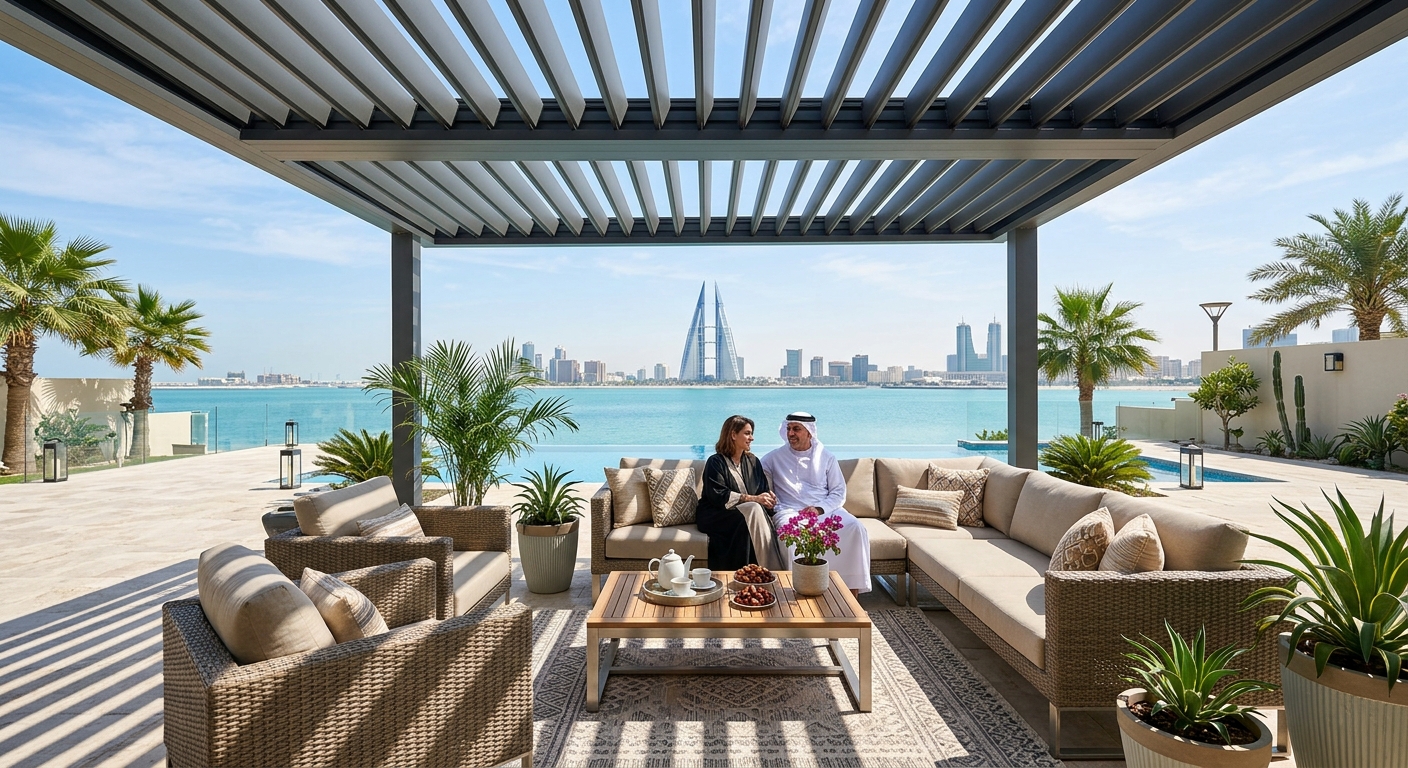
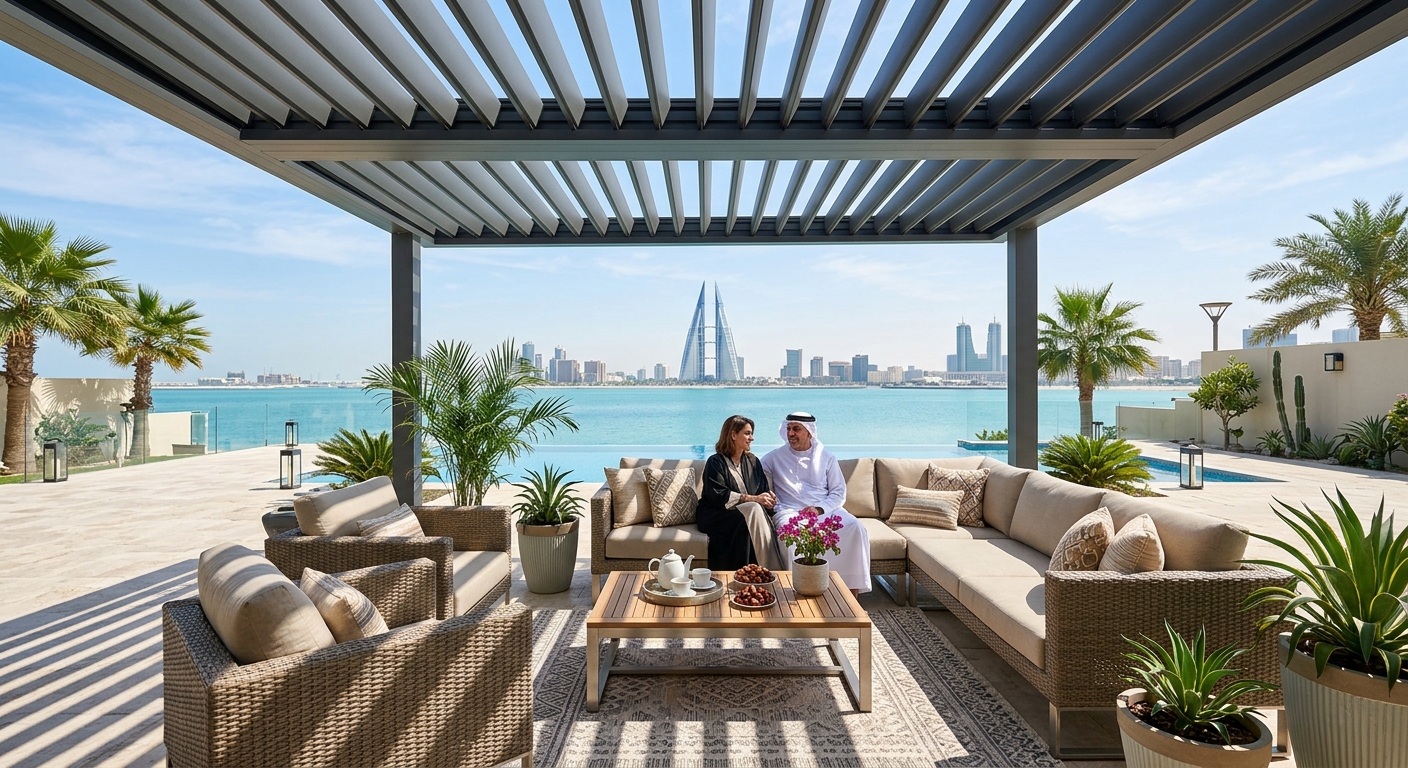
Engineering Shade: Integrating Louvered Pergolas and Wind-Channelling Structures
Passive shade is not enough. To make outdoor spaces functional, you must actively engineer the microclimate. Standard wooden pergolas degrade rapidly under Gulf UV exposure and trap heat underneath them.
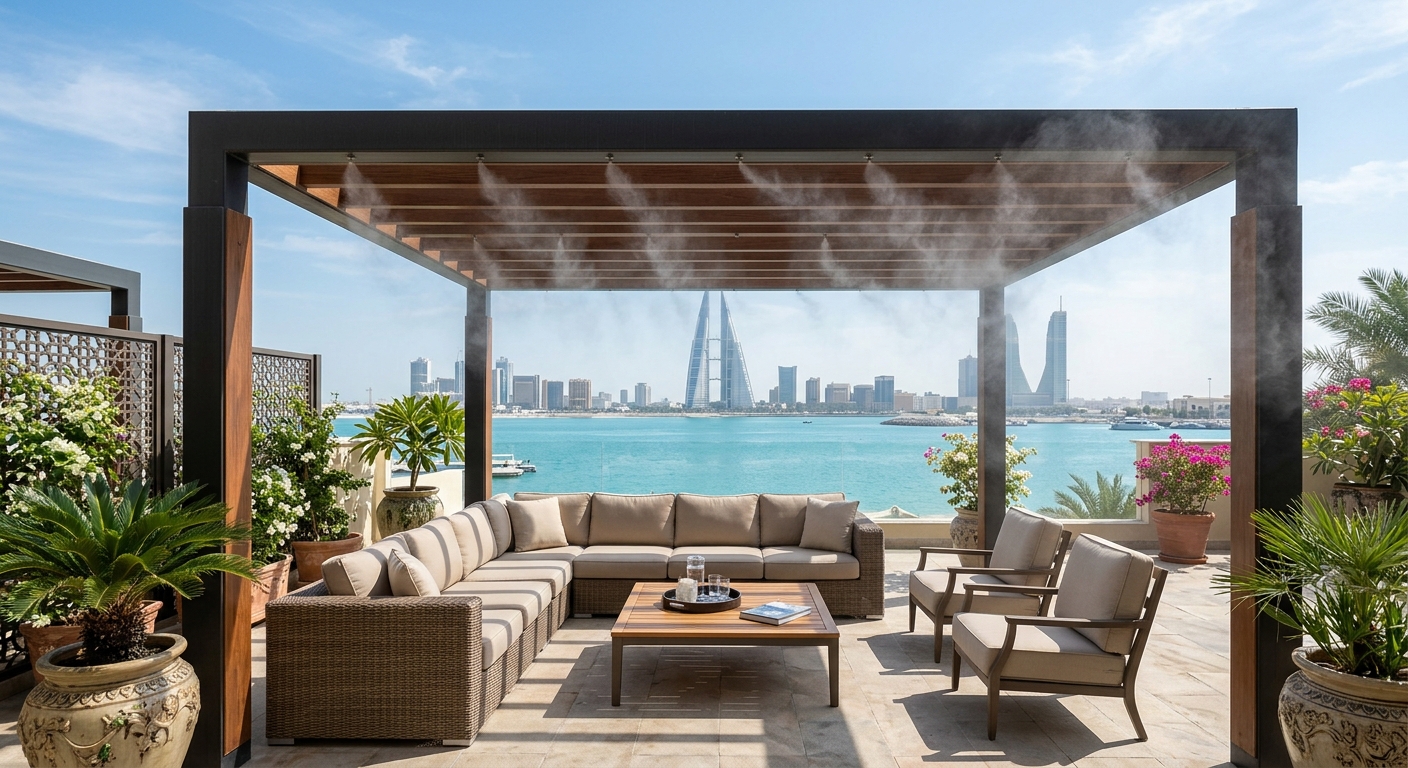
Instead, mandate bioclimatic louvered pergolas made from powder-coated aluminum. These structures feature motorized roof blades that track the sun to block direct rays while allowing trapped hot air to vent upward.
- The Tradeoff: Bioclimatic pergolas cost between BD 150 and BD 300 per square meter, significantly more than static wooden structures. However, you gain complete control over ventilation and waterproof coverage during winter rains.
- The Constraint: Ensure the architect positions these structures to block the harsh western sun (from 2 PM to 6 PM) while channeling the prevailing northerly Al Shamal winds through the seating area.
Combating Soil Salinity: Mandatory Excavation and Sweet Sand Replacement Protocols
Much of Bahrain’s luxury real estate—particularly in reclaimed areas like Diyar Al Muharraq, Amwaj Islands, and Bahrain Bay—sits on highly saline sabkha (salt flat) soil. Planting directly into this soil guarantees plant death via osmotic stress within six months.
Your landscape architect must include a strict soil remediation protocol in their initial tender.
- The Requirement: Demand a minimum excavation of 1.2 meters for tree planting zones and 0.6 meters for shrubs.
- The Mechanism: The contractor must remove the saline soil, install a capillary break (a layer of gravel wrapped in geotextile fabric) to prevent salty groundwater from wicking upward, and backfill with imported agricultural "sweet sand" mixed with organic compost.
- The Red Flag: If a contractor tells you they can just "wash the salt out" with heavy watering, fire them immediately. This practice only raises the saline water table, drowning the roots in salt water.
Factor 2: Smart Water Management and Hardscape Integration
Assess the architect based on their strategy for minimizing water waste and selecting materials that do not absorb and radiate extreme heat. Water is expensive in Bahrain, and thermal mass will dictate whether your garden feels like an oasis or an oven.
Evaluating Subsurface Drip Irrigation Systems vs. High-Evaporation Sprinklers
The traditional method of watering landscapes with pop-up sprinklers is functionally obsolete in the Gulf. In July, up to 60% of water expelled from a sprinkler evaporates before it ever penetrates the soil. Furthermore, hard water overspray leaves permanent white calcium stains on your boundary walls and expensive hardscaping.
Your absolute baseline requirement is a pressure-compensated subsurface drip irrigation system, paired with a smart weather-based controller.
- How it works: Emitter lines are buried 20-30 centimeters below the soil surface, delivering water directly to the root zone. This eliminates evaporation, prevents weed seed germination on the surface, and keeps pathways completely dry.
- The Standard: Specify systems that use root-intrusion-resistant tubing (such as Netafim or Rain Bird copper-shielded lines) to prevent roots from clogging the emitters. The controller must connect to local Wi-Fi to automatically halt watering during winter rainstorms.
Heat-Reflective Hardscaping: Mandating Light Travertine over Heat-Trapping Dark Granite
Hardscape materials absorb solar radiation all day and release it at night. If you allow your architect to specify dark granite, basalt, or dark-stained concrete, surface temperatures will exceed 75°C in August. This burns bare feet, destroys adjacent plant life through radiant heat, and keeps the outdoor area uncomfortably hot until midnight.
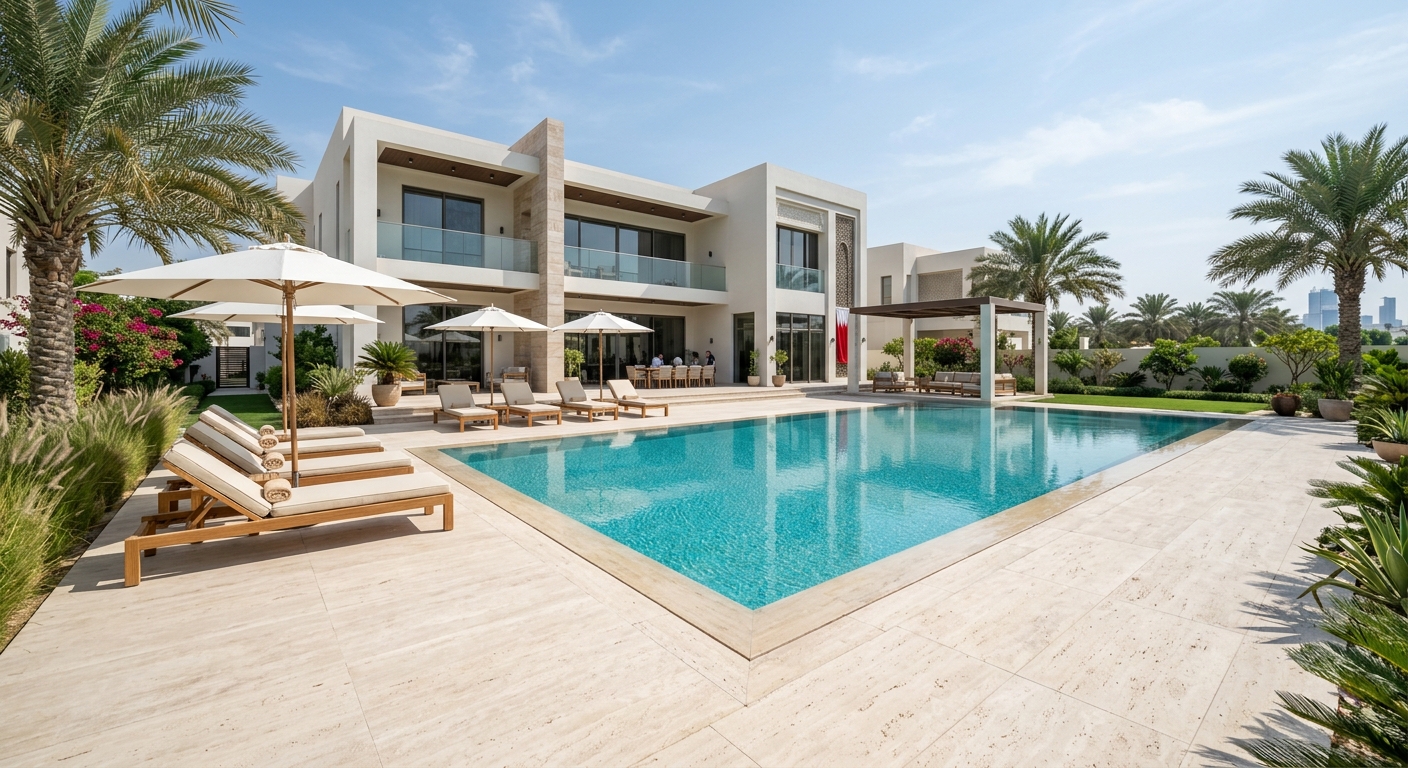
- The Solution: Mandate low-thermal-mass, light-colored materials. Unfilled, tumbled light travertine or premium heat-reflective outdoor porcelain (minimum 20mm thickness) are the only acceptable choices for pool decks and main patios.
- The Metric: Travertine stays approximately 20°C to 25°C cooler than dark granite under direct Bahraini sun because its porous nature and light color reflect rather than store thermal energy.
Factor 3: Architectural Continuity and Municipal Compliance
Evaluate how the outdoor design integrates with the indoor living spaces and adheres to strict local zoning laws to prevent costly legal teardowns. Landscape architecture for luxury homes must blur the line between the interior villa and the exterior grounds.
Navigating Bahrain Municipality Setback Rules for Pools and Outdoor Majlis Structures
Bahrain Municipality enforces strict setback regulations that dictate how close you can build to your property line. Ignoring these rules during the design phase is the most expensive mistake you can make.
- The Rule: Any permanent structure—including swimming pools, pump rooms, block-wall outdoor kitchens, and enclosed majlis structures—requires a strict 2-meter setback from the boundary wall.
- The Consequence: If your architect designs a pool sitting 1 meter from the neighbor's wall, the municipality will refuse to issue your completion certificate. You will be legally forced to demolish the structure, fill the hole, and rebuild at your own expense. Never accept a design that pushes permanent structures into the 2-meter setback zone, regardless of how "creative" the architect claims to be.
The 70/30 Rule: Benchmarking the Ratio of Functional Hardscape to Drought-Tolerant Softscape
A common failure in high-end landscaping is over-planting. Designing a jungle in a desert climate results in astronomical water bills and a full-time maintenance nightmare.
Apply the 70/30 Rule for luxury Gulf properties: 70% of the usable area should be dedicated to functional hardscape, shaded seating, pools, and architectural features. Only 30% should be dedicated to softscape (plants and trees).
- Why this matters: The 30% softscape should be strategically concentrated around seating areas and visual focal points (like the view from the main living room window) to create maximum impact.
- What you give up: You sacrifice the "English Country Estate" aesthetic. In return, you gain a modern, usable space that requires minimal maintenance and keeps your municipal water bill under BD 50 per month instead of BD 300.
What Not to Waste Money On: The Illusion of European Gardens
Avoid expensive features that look impressive in a portfolio but fail rapidly in the Arabian Gulf climate. Landscape architecture for luxury homes is often plagued by imported ideas that defy local environmental realities.
Imported Temperate-Climate Flora That Requires Constant Chemical Intervention
Do not allow your architect to specify Italian Olive trees, French Hydrangeas, or Japanese Maples. While these can theoretically survive in Bahrain if heavily shaded, sprayed with anti-desiccants, and chilled with cooled water, they will always look stressed and unhealthy.
- The Alternative: Demand structural, climate-adapted plants. Use mature Washingtonia robusta palms, Plumeria (Frangipani) for scent, Delonix regia (Poinciana) for canopy shade, and Bougainvillea for year-round color. These thrive in the heat and look vibrant when European imports look dead.
Over-Engineered Proprietary Smart Lighting Hubs That Lock You Into One Vendor
Many landscape firms will try to upsell you on a proprietary "smart garden" lighting system. These systems require specific, branded hubs and transformers.
- The Failure Mode: When a proprietary LED fixture burns out in three years, and the original manufacturer has discontinued that specific line or gone out of business, you cannot replace the bulb. You have to rip out the entire system.
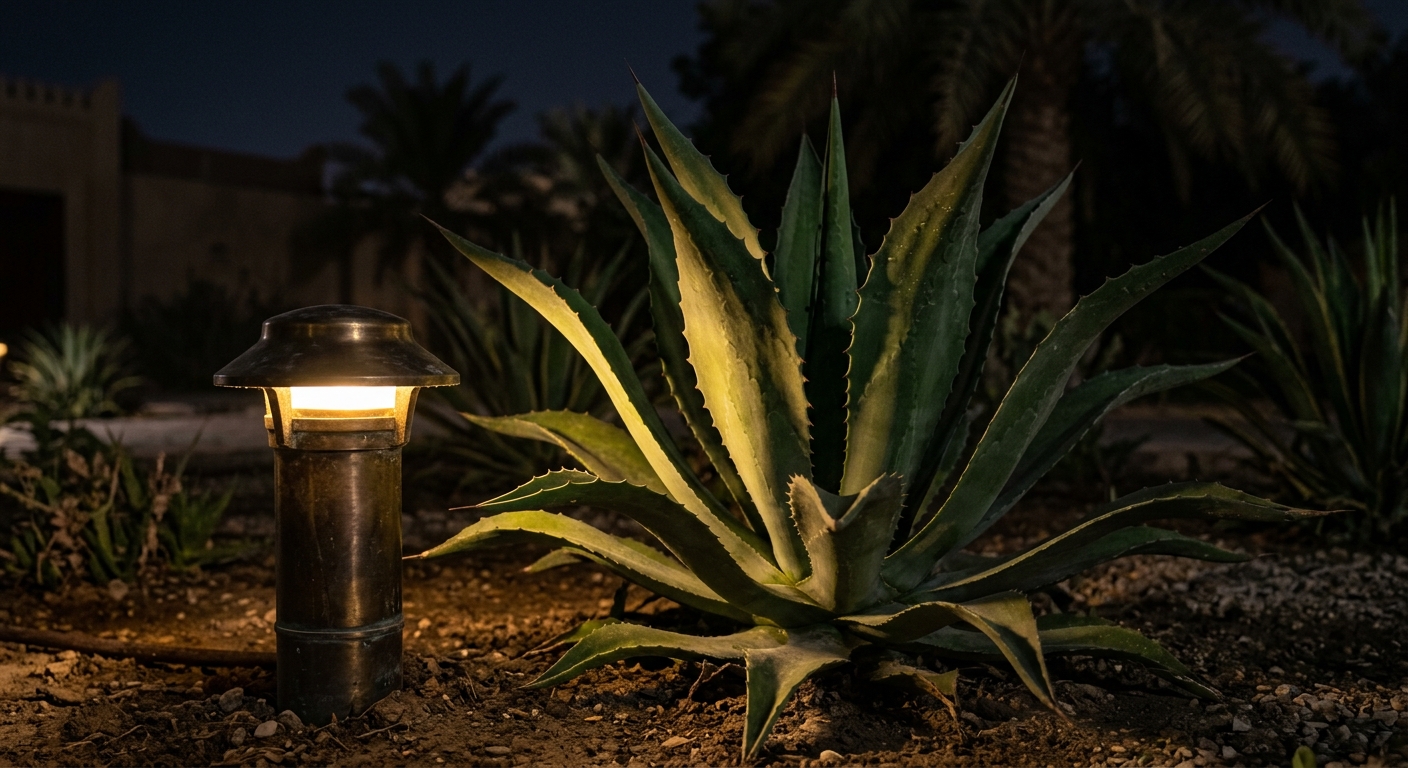
- The Fix: Specify standard 12V or 24V low-voltage brass fixtures using replaceable MR16 or GU10 LED bulbs. Control them via a standard, open-protocol smart switch (like Lutron or KNX) installed in your main electrical panel.
Massive Natural Turf Lawns: High Maintenance Costs with Zero Summer Utility
Natural grass is a liability in Bahrain. A 100-square-meter lawn of Paspalum grass requires up to 1,200 liters of water per day in July and August just to stay green. Furthermore, it requires weekly mowing, regular fertilization, and constant pesticide application to fight fungal infections caused by high humidity.
Worst of all, you will not walk on it during the summer months. If you need a green expanse for children to play on or for visual contrast, invest in high-grade, UV-stabilized synthetic turf with a cooling infill. It pays for itself in water savings within 18 months.
Budget Guide: How Much Should You Spend?
A breakdown of realistic landscape architecture costs in Bahraini Dinars (BD), categorizing what specific features and structural work you secure at each tier. These figures assume a standard luxury villa plot of 500 to 800 square meters of outdoor space.
Baseline Luxury (BD 15,000 - BD 30,000): Essential Hardscaping, Soil Prep, and Automated Irrigation
At this tier, you are paying for absolute structural correctness rather than extreme customization.
- What you get: Complete soil excavation and sweet sand replacement, pressure-compensated subsurface drip irrigation, standard porcelain or concrete paver hardscaping, basic 12V brass lighting, and young, climate-adapted plants.
- What you don't get: Large swimming pools, imported mature specimen trees, or automated climate-control structures. This budget secures a bulletproof foundation that looks clean and survives the summer.
Mid-Tier Estate (BD 30,000 - BD 75,000): Custom Concrete Pools, Integrated Majlis, and Mature Date Palms
This is the standard entry point for true landscape architecture for luxury homes in Bahrain.
- What you get: A custom-designed, temperature-controlled concrete swimming pool (not a drop-in fiberglass shell). You also secure an integrated outdoor kitchen or basic majlis structure, premium travertine paving, and immediate visual impact through the installation of mature date palms (featuring 3-to-4-meter clear trunks, costing BD 300-500 each).
- The Tradeoff: At this level, municipal permits become complex. You must account for 4-6 weeks of approval time for the pool and permanent structures before ground is broken.
Ultra-Luxury (BD 75,000+): Climate-Controlled Outdoor Rooms, Advanced Misting Systems, and Bespoke Water Features
At this tier, the outdoor space becomes a highly engineered extension of the villa's interior.
- What you get: Bioclimatic motorized pergolas, glass-enclosed outdoor living rooms with dedicated split AC units, and custom fire-and-water features.
- The Misting System Standard: High-end budgets allow for high-pressure misting systems (operating at 1,000+ PSI). Unlike cheap low-pressure systems that get everything wet, 1,000 PSI systems flash-evaporate the water instantly, dropping the ambient temperature by up to 10°C without leaving a single drop of moisture on your furniture.
Red Flags and Scams to Avoid
Warning signs that indicate you are dealing with an unqualified planting contractor rather than a professional landscape architect.
Skipping the Initial Soil Salinity and Groundwater Percolation Tests
If a landscape designer hands you a planting plan and a quote without first testing your soil and groundwater levels, tear up the quote. In coastal areas of Bahrain, the water table can be just 1 meter below the surface. If they plant a deep-rooting tree without knowing where the water table is, the roots will hit the saline groundwater and rot. A professional will mandate a percolation test (digging a hole, filling it with water, and timing how fast it drains) to engineer the correct drainage system.
Failing to Provide 3D Renders and Detailed Mechanical, Electrical, and Plumbing (MEP) Drawings
A hand-drawn sketch of where the trees will go is not landscape architecture. You must demand detailed MEP drawings.
- Why it matters: Swimming pools and heavy water features require strict hydraulic calculations to size the pumps correctly. Garden lighting requires voltage drop calculations to ensure the lights at the end of the garden are as bright as the ones near the house. If they cannot produce CAD-based MEP drawings, they are guessing, and you will pay for their eventual mistakes.
Vague Plant Guarantees and Missing Post-Handover Maintenance Protocols
The highest risk period for any new landscape is the first 90 days, known as the establishment period. Unprofessional contractors will finish the job, take the final payment, and disappear.
- The Standard: A legitimate landscape architecture contract must include a minimum 90-day maintenance and replacement guarantee. If a BD 400 specimen tree dies in month two because of transplant shock or an irrigation failure, the contractor must replace it at their cost. If this clause is missing from the contract, do not sign it.
Conclusion
To finalize your landscape architecture investment, follow this strict validation checklist.
First, demand a comprehensive soil and groundwater test before any design work begins; refuse any plan that ignores excavation and soil replacement. Second, verify that the proposed irrigation system utilizes subsurface drip technology tied to a smart weather controller—reject pop-up sprinklers entirely. Third, ensure all outdoor structures clear the standard 2-meter Bahrain Municipality setback rule to avoid forced demolitions.
Your absolute minimum requirements are proper soil excavation, smart subsurface irrigation, and heat-reflective hardscaping. Treat automated misting systems, bioclimatic pergolas, and imported marble as nice-to-haves that scale with your budget.
Before signing the final execution contract, take one final protective step: hire an independent agricultural engineer in Bahrain for a one-time flat fee (typically BD 150 to BD 300) to review the architect's irrigation flow calculations and planting schematics. This tiny upfront investment ensures the proposed design is actually viable for the local climate, protecting tens of thousands of dinars from evaporating in the August heat.